
How to Choose a HYROX Training Program
A HYROX training program connects running, strength, functional fitness, and recovery into a progressive plan for race day. Instead of collecting random sweaty workouts like Pokémon, you train specific skills in the right sequence, measure improvement, and build the endurance, power, pacing, and confidence needed to perform well.
Why do random workouts stop producing results?
A hard workout is not automatically a useful workout. You can leave every session exhausted and still remain stuck if your training has no clear progression.
Random sessions often create three problems:
- You repeat the same weights, distances, and paces.
- You train what feels fun while avoiding what needs work.
- You recover poorly because every day becomes a surprise attack.
HYROX makes this especially obvious. The race combines eight 1-kilometer runs with functional stations including sled pushes, sled pulls, burpee broad jumps, rowing, farmer’s carries, sandbag lunges, and wall balls. You need more than general fitness. You need fitness that transfers.
That means your workouts should answer a simple question: What is this session helping me do better?

What makes a HYROX training program effective?
An effective HYROX training program is built around progression, specificity, and balance. It does not ask you to go all-out every day, because “maximum effort” is not a personality trait or a sustainable programming strategy.
A well-designed plan should include:
- Running development: Improve aerobic capacity, running economy, speed, and your ability to run after a demanding station.
- Strength training: Build the force needed for sled work, carries, lunges, wall balls, and repeated efforts.
- Functional conditioning: Practice transitions and combinations that resemble race demands.
- Mobility and movement quality: Keep your hips, ankles, shoulders, and spine prepared for volume.
- Recovery and progression: Increase training stress gradually while protecting your ability to show up next week.
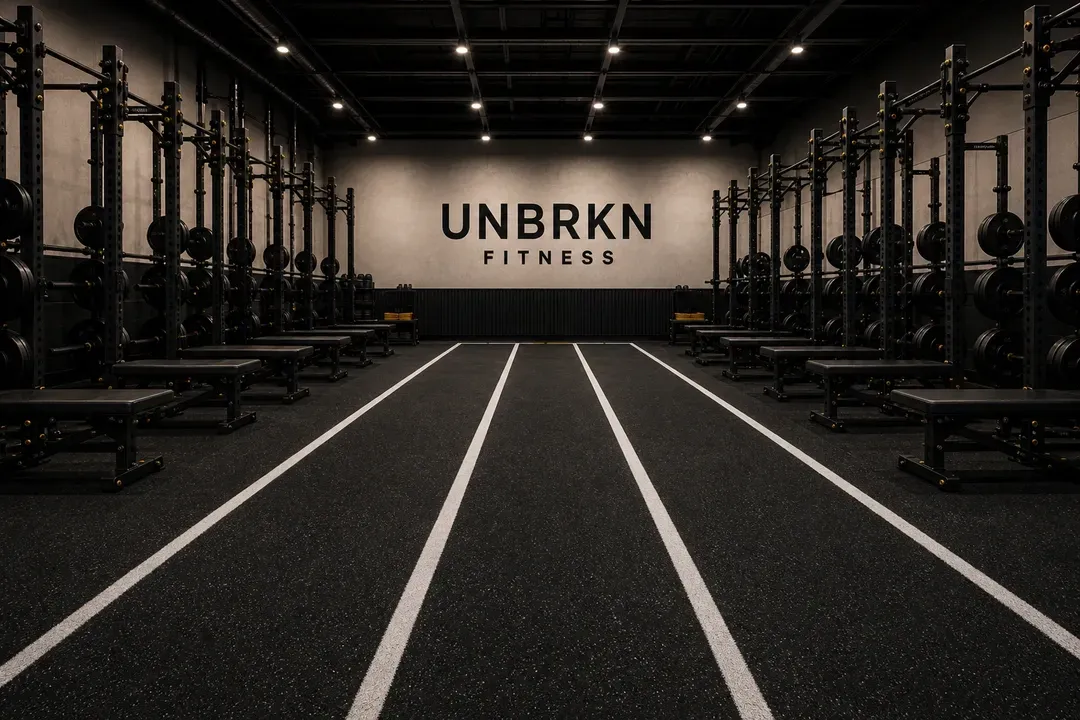
At UNBRKN Fitness , coaches use practical movement patterns to help athletes build strength, endurance, mobility, and mental toughness. The goal is not to make every workout look impressive on social media. The goal is to make your next race—and your everyday movement—feel more manageable.
A workout is one day. A program connects the days.
One workout can improve your mood. A program can improve your performance.
That distinction matters because adaptations happen over time. A single interval session may challenge your lungs, but a month of carefully planned running can improve your pacing. One heavy sled push may make your legs question your life choices, but repeated exposure can build the strength and technique to move it efficiently.
A connected program gives each training day a job. For example:
- A strength-focused day may build lower-body power and trunk stability.
- A running day may improve your pace control and aerobic base.
- A conditioning day may combine running with stations under manageable fatigue.
- A recovery-focused day may improve mobility and prepare you for the next training block.
This structure helps you work hard without confusing fatigue for progress.
How should strength training support HYROX?
HYROX strength training is not about becoming the strongest person in the room for one heroic repetition. It is about producing useful force repeatedly, while breathing hard and maintaining good technique.
Prioritize movement patterns such as:
- Squatting and lunging for wall balls and sandbag lunges
- Hinges for power, posture, and efficient force production
- Carries for grip, trunk control, and total-body endurance
- Pressing and pulling for upper-body strength
- Bracing and rotational control for stable movement under fatigue
The best loading depends on your experience, race division, current fitness, and technical ability. A coach can help you choose weights that challenge you without turning every set into a dramatic documentary about survival.
If you are new to structured strength work, Personal Training can provide individualized instruction and progressions. If you already have experience and need flexibility, Open Gym may help you add focused work around your primary training.
How much running belongs in HYROX preparation?
Running is half the race, so it deserves more attention than being treated as the awkward cousin of strength training. However, more running is not always better. The right amount depends on your current base, training age, schedule, and race timeline.
A balanced approach may include:
- Easy running to build aerobic capacity and support recovery
- Intervals to develop speed and control at higher effort
- Tempo work to sustain a challenging pace
- Brick sessions that pair running with functional stations
- Technique practice for efficient cadence, posture, and breathing
The key skill is learning to run well when your legs are already tired. That is why occasional race-specific combinations matter. You are not just training your mile pace; you are training your ability to find that pace after sleds, burpees, or wall balls have sent your heart rate on a small vacation.

What does HYROX-specific conditioning look like?
HYROX-specific conditioning teaches you to manage effort across repeated run-and-station combinations. It should develop pacing, transitions, movement efficiency, and composure—not simply produce the sweatiest shirt in Arizona.
Useful sessions can include:
- Controlled combinations: Pair a run with one station and repeat at a sustainable effort.
- Transition practice: Move from running to a station and back without wasting time or panic.
- Station intervals: Break challenging movements into repeatable sets with planned rest.
- Longer simulations: Practice race rhythm without turning every weekend into a full competition.
Your coach should adjust volume, intensity, and movement standards based on your goals. A first-time competitor needs a different plan from an experienced athlete chasing a personal best.
Measure progress beyond exhaustion
Feeling tired is not a complete performance metric. Track information that helps you make better decisions:
- Running pace at a similar effort
- Weight, repetitions, and technique on key movements
- Recovery between intervals
- Ability to maintain form under fatigue
- Session consistency and perceived difficulty
You can also record how quickly you settle after a station, whether your transitions improve, and how confident you feel repeating a demanding effort. These details reveal progress that a mirror—or your laundry pile—cannot.
How do you choose the right training plan?
Look for a plan that matches your current ability, race goal, and available training time. A good program should explain the purpose of each session, offer modifications, and progress gradually.
Before committing, ask:
- Does it include both running and functional strength?
- Are intensity and recovery planned, or is every day “go harder”?
- Can the workouts be scaled for your experience?
- Will a coach review technique and pacing?
- Does the schedule fit your actual life?
If the answer to those questions is yes, you are probably looking at training rather than a random collection of exercises wearing a motivational quote.
Your next step at UNBRKN Fitness
Your workouts should lead somewhere. For HYROX athletes and strength-focused fitness enthusiasts, that means connecting running, strength, conditioning, mobility, and recovery around a clear outcome. Start by identifying your goal: complete your first race, improve your division time, build general performance, or become more capable in everyday life. Then choose a structured plan, track the basics, and give it enough time to work. At UNBRKN Fitness in Phoenix, you can Get Started with coaching and programming designed to make each session part of a bigger picture. Show up, train with purpose, and let the sweat finally submit a progress report.
Recent Posts